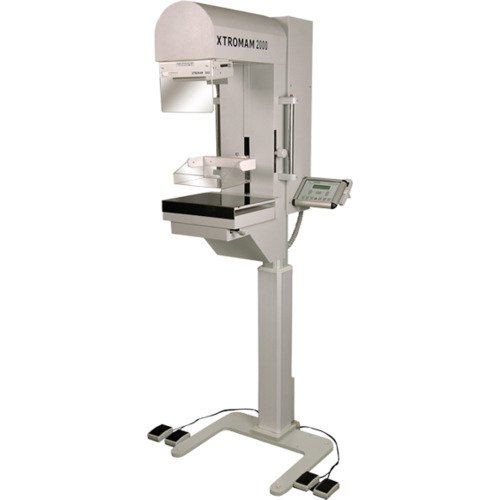
Mammography is the best tool we have to find breast cancers early — before they are palpable. This means a better chance of cure and, if surgery is required, a cosmetically-acceptable result. In general, the earlier a cancer is found, the better the outcome.
Breast cancer is now the most common cancer among women in India — about 1.9 lakh new cases and nearly 1 lakh deaths every year (GLOBOCAN 2022). Many of these women are diagnosed only at a late stage. Regular screening changes that.
Who should get a mammogram?
Women aged 40 and above — a screening mammogram every year, even if you have no complaints.
Women at higher risk — a mother, sister or daughter with breast or ovarian cancer, a known BRCA gene change, or past radiation to the chest. Talk to your doctor; screening may need to start earlier.
Anyone with breast symptoms — a lump in the breast or armpit, nipple discharge, an inverted nipple, dimpling or puckering of the skin, or pain in one spot that does not go away.
For women under 40, and during pregnancy or breastfeeding, a breast ultrasound is usually the first test.
Mammography + breast ultrasound
Many Indian women have dense breast tissue, which can hide a lesion on a mammogram. When needed, we add a breast ultrasound with elastography and AI-assist tools on our Samsung RS85 PRESTIGE — at the same visit — for a more complete evaluation.
Your report: BI-RADS explained
Your report is given the same day and ends with a standard BI-RADS category, which tells you and your doctor what to do next:
BI-RADS 0 — more views or an ultrasound are needed to complete the assessment.
BI-RADS 3 — probably benign; a short-interval follow-up (usually 6 months) is advised.
BI-RADS 4 & 5 — suspicious or highly suspicious; a biopsy is recommended.
BI-RADS 6 — cancer already proven by biopsy.
When to schedule it
It is best to schedule your mammogram about a week after your menstrual period. Your breasts will be less tender or swollen, which means less discomfort during the X-ray. Please take an appointment beforehand so that we can guide you better.
What (and what not) to wear
Wear a 2-piece outfit, as you will need to remove your top and bra. Do not apply deodorant, antiperspirant, powder, lotion or ointment on or around your chest on the day of your mammogram — these products can appear as white spots on the X-ray.
What to bring and tell us
Bring your previous mammograms and breast reports — comparison with older images makes the report more accurate.
Tell us if you are pregnant or might be, are breastfeeding, or have breast implants.
What to expect
The entire procedure takes about 20 minutes and is performed by a female technician. The breast is compressed between two plates for a few seconds while an X-ray is taken, then repositioned for another view, and the process is repeated on the other breast. Compression can be uncomfortable but is needed to provide a clearer view.
Halol's first digital mammography — since October 2021
Both screening and diagnostic mammography
Performed by a female technician
Same-day reports, in standard ACR BI-RADS categories
Combined with breast ultrasound & elastography when needed
Quick procedure — about 20 minutes
Reported by experienced radiologists
Real cases from our centre
Published breast imaging cases from our centre, with patient details removed. Tap an image to enlarge.
Dense breastsMammography + ultrasound
A small cancer hidden in dense breast tissue
Vague breast pain at 37. Mammography showed subtle distortion with fine calcifications in dense tissue; ultrasound with elastography the same day found a stiff 7.8 mm lesion, and a biopsy confirmed cancer.
An 85-year-old woman with a breast lump. Mammography also found a cluster of calcifications in the other breast, suspicious for early cancer, that ultrasound alone could not have picked up.
A mammogram is a breast X-ray used to detect early signs of breast cancer or other abnormalities.
Do I need to schedule my mammogram at a specific time in my cycle?
For comfort, we recommend scheduling about a week after your menstrual period, when the breasts are less tender.
How should I prepare for a mammogram?
Avoid wearing deodorant, antiperspirant, powder, lotion or ointment on or around your chest on the day of the mammogram — they can appear as white spots on the X-ray. Wearing a two-piece outfit also makes things easier.
Is mammography safe? What are the risks of radiation?
Mammography uses low-dose radiation and is safe. The benefits of early detection of breast cancer far outweigh the minimal risks involved.
At what age should I start getting mammograms, and how often?
Women should have a screening mammogram every year from the age of 40. If a close relative has had breast or ovarian cancer, or you carry a BRCA gene change, talk to your doctor — screening may need to start earlier.
Does a mammogram hurt?
The breast is pressed between two plates for a few seconds for each picture. This can feel uncomfortable, but it is brief, and booking a week after your period makes it easier.
Will a woman perform my mammogram?
Yes. Mammography at our centre is performed by a female technician.
When will I get my mammography report?
Mammography reports are usually given the same day.
What does BI-RADS on my report mean?
BI-RADS is a standard scale from 0 to 6 that tells you and your doctor what to do next. 1 and 2 are normal or benign, 3 means a short follow-up is advised, 4 and 5 mean a biopsy is recommended, and 0 means more views or an ultrasound are needed.
I am under 40, pregnant or breastfeeding. Which breast test should I have?
A breast ultrasound is usually the first test in these situations. Please tell us when you book, and our radiologist will advise you.
Can I have a mammogram if I have breast implants?
Yes. Please tell us when you book and before the scan, so that special views can be taken.
We’re open Mon – Sat: 9:00 AM – 7:00 PM | Sun: By Appointment Only | 2D Echo: Thu 5–6 PM | MRI / CT / XRAY / OPG / Pathology: 24×7 available — walk in or call ahead.