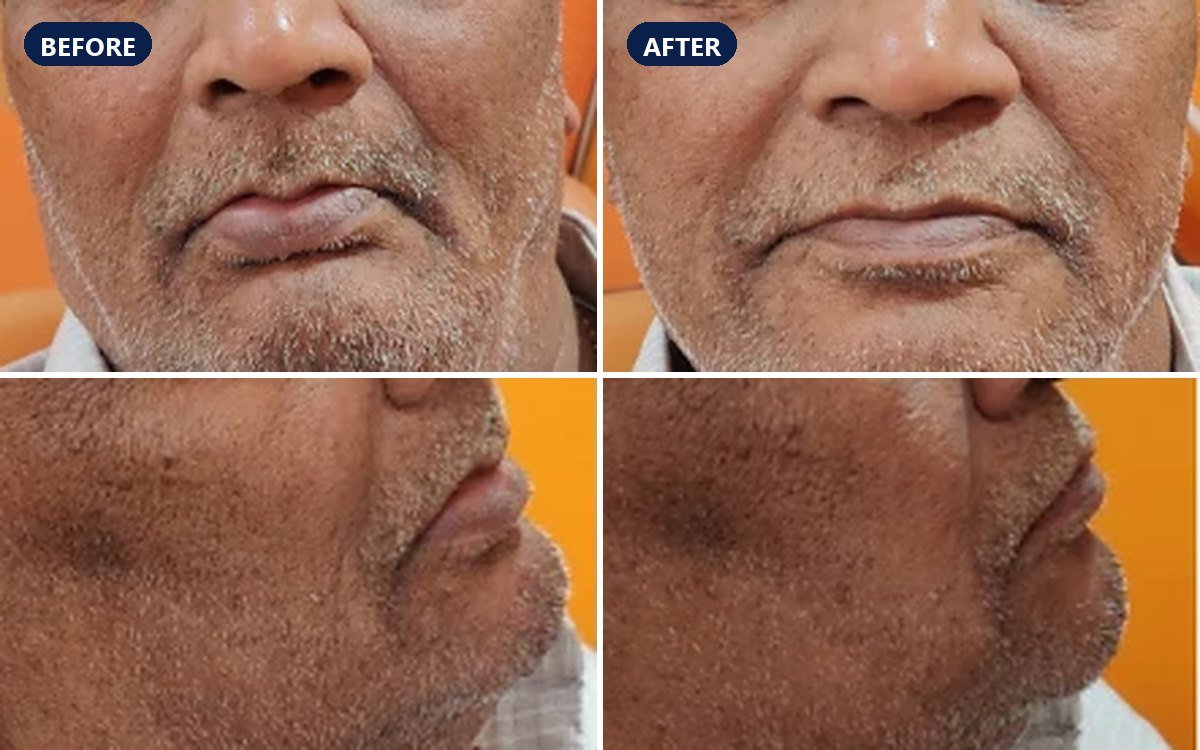
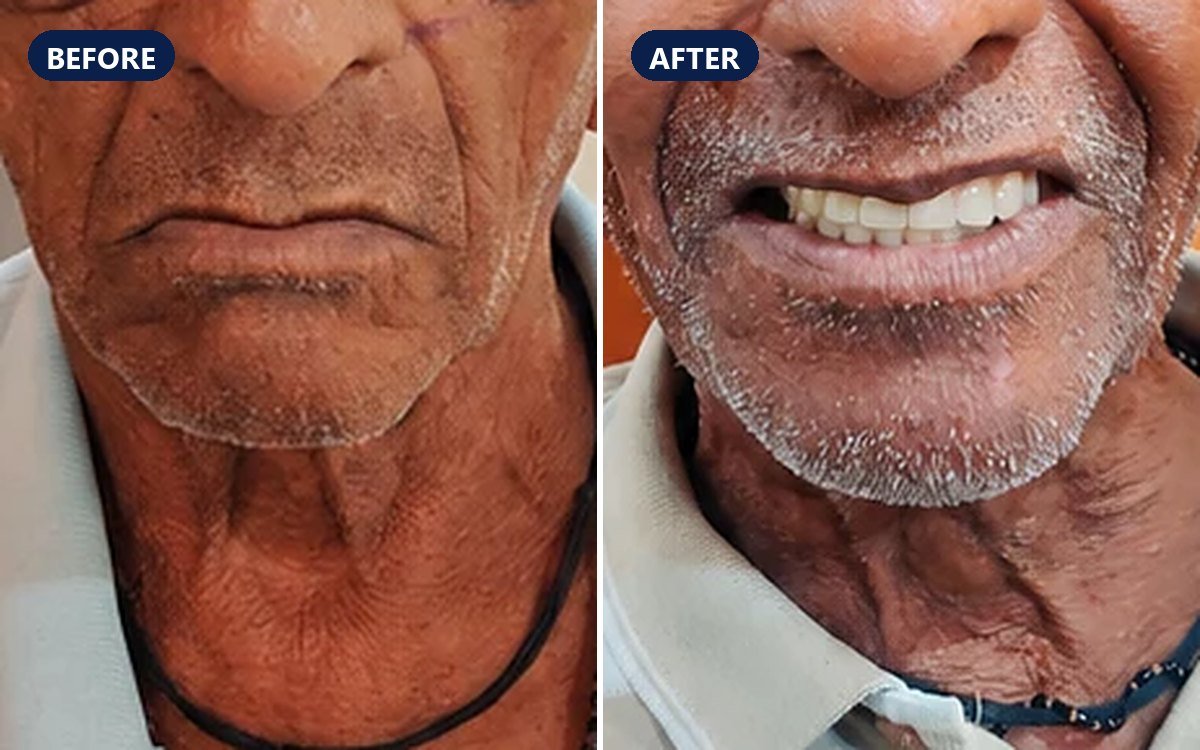
An older man with no teeth left came to the clinic. Before treatment his lips folded inward over the gums; with new upper and lower complete dentures he smiles with a full set of teeth. This case also covers what dentures help with and how the first weeks with new dentures usually go.
Case timeline
- Presentation
An older man with no teeth left in either jaw.
- Examination
Before treatment (A): the lips fold inward over the toothless gums, with deep lines around the mouth.
- Treatment
Upper and lower complete dentures, with the teeth chosen and set to suit his face.
- Result
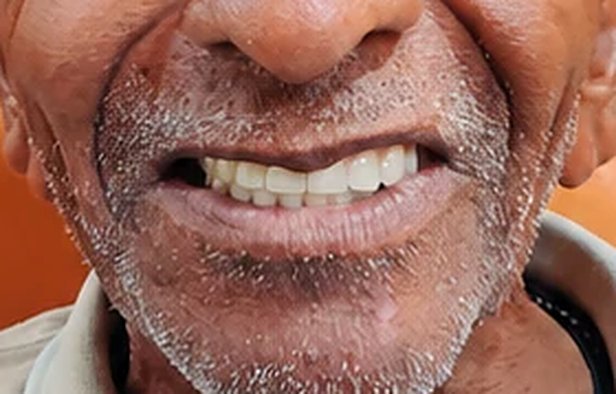
With the dentures in (B, C): a full smile, with the lips supported by the denture teeth.
Clinical photographs
Before and after
Lower face, cropped for privacy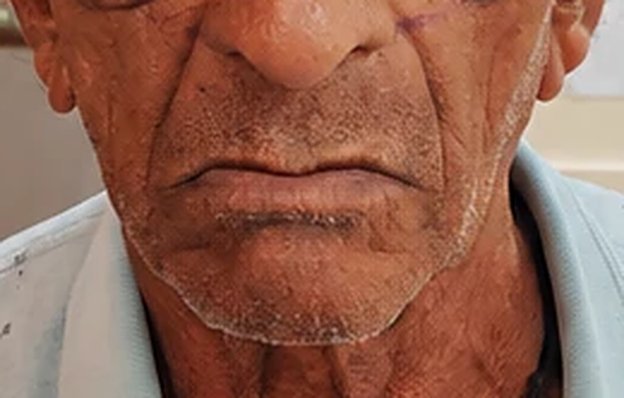
Look closer
The new smile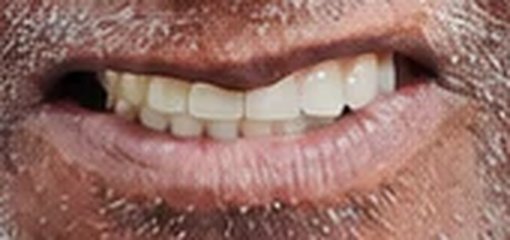 C
Denture teeth are chosen for shade, shape and size to suit the patient's age and face, and set to follow the line of the lips when smiling.
Complete edentulism (no teeth in either jaw)
Treated with upper and lower complete dentures.
Getting used to new dentures
The first days
New dentures can feel bulky, and saliva may increase. Start with soft food cut small, chew on both sides at once, and read aloud to get used to speaking with them.
Weeks two to four
Most people move back to a normal diet. Sore spots are common early on and are eased at a review visit; don't adjust the denture yourself.
The long term
The gums and bone keep changing, so dentures are checked at regular check-ups (usually yearly) and relined or remade when they loosen.
What dentures help with
Smile and appearance: the teeth support the lips and cheeks.
Eating: chewing becomes easier, though biting very hard food with the front teeth stays limited.
Speech: sounds such as 's' and 'f' improve as the tongue and lips adapt.
Comfort: a well-fitted denture rests evenly on the gums.
Caring for dentures
Brush dentures every day with a soft brush and mild soap or a denture cleaner (toothpaste can scratch them), over a basin of water in case they slip.
Take them out at night to rest the gums, and keep them in water so they don't dry out.
Clean the gums and tongue with a soft brush too.
When to come back sooner
A denture that rocks, rubs or keeps coming loose, a cracked or chipped denture, or a mouth sore that hasn't healed in about two weeks should be seen promptly.