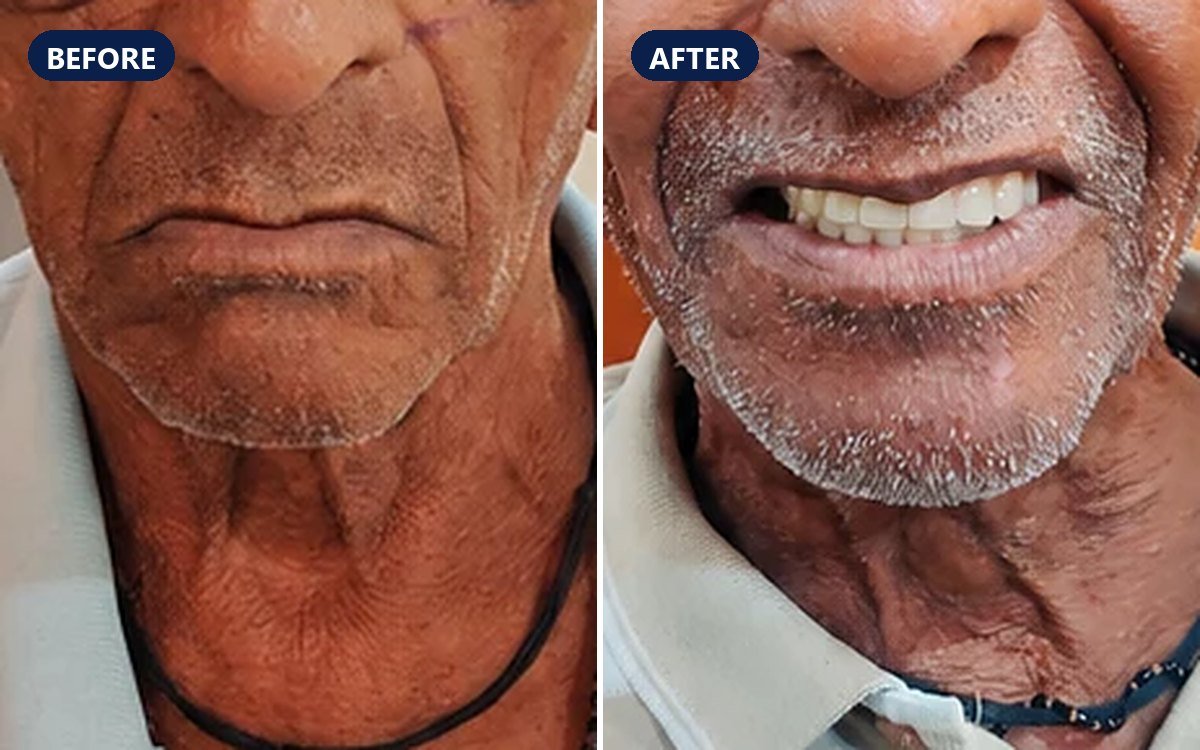
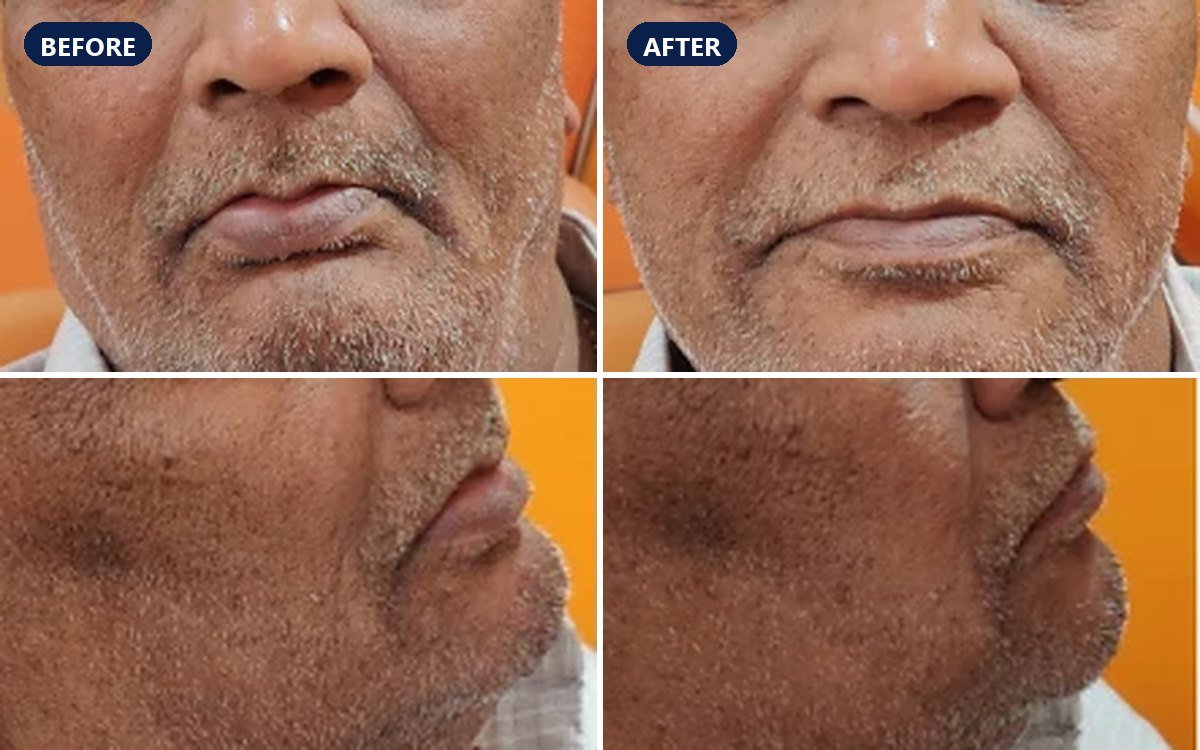
An older man who had lost all his teeth had also lost the support they give the lips and the lower face. New upper and lower complete dentures put that support back. The front and side photographs, before and after, show the lips closing in a relaxed line and a smoother profile from nose to chin.
Case timeline
- Presentation
An older man with no natural teeth left in either jaw. With no teeth behind them, the lips and cheeks had lost their support.
- Examination
Front and side photographs before treatment (A, C): pursed lips, with deep creases at the corners of the mouth and below the lower lip.
- Treatment
Complete dentures for the upper and lower jaws, made to the patient's own bite and face.
- Result
With the dentures in (B, D), the lips close in a relaxed line and the profile from nose to chin is smoother.
Clinical photographs
Front view
Lower face, cropped for privacy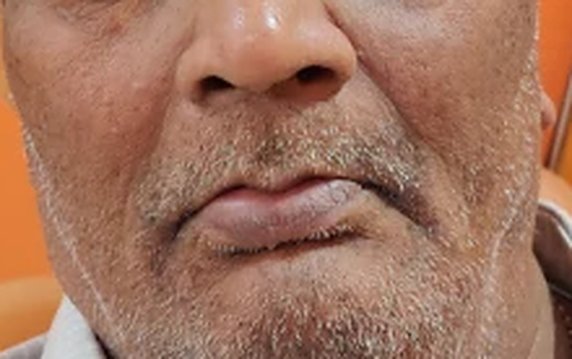
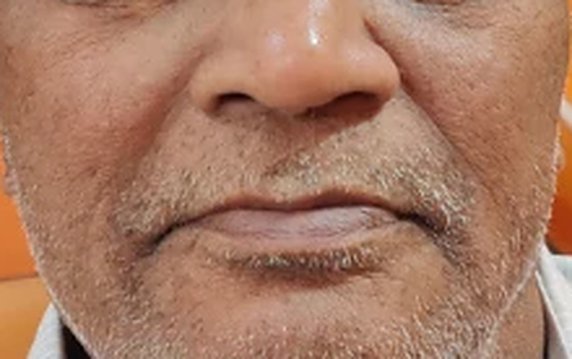
Side view
The profile from nose tip to chin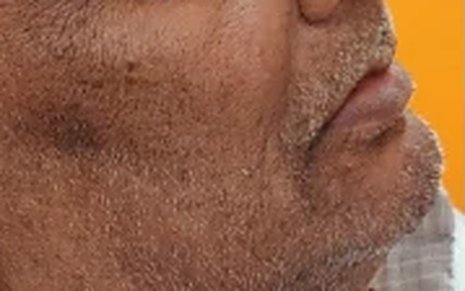 C
 D
The front teeth of a denture are set where natural teeth would stand, so they support the lips from behind, just as natural teeth do.
Complete edentulism (no natural teeth in either jaw)
Treated with upper and lower complete dentures.
How complete dentures are made
Impressions
The gums and the shape of each jaw are recorded in impressions, usually a first one and then a more accurate final one in a tray made for the patient.
Bite, height and teeth
The jaw relationship and the height of the lower face are measured, and the tooth shade, shape and size chosen. A wax try-in checks the look, speech and bite before the denture is finished.
Fit and review
The finished acrylic dentures are fitted and the bite checked. Review visits in the first weeks ease any sore spots.
What missing teeth take away
Lip and cheek support: teeth hold the lips and cheeks out; without them the lips fall in and the creases deepen.
Face height: without teeth the jaws close further than they should, so the chin comes closer to the nose.
Chewing and speech: both become harder, and the choice of food narrows.
Complete, partial, flexible or implant-retained?
Complete dentures replace all the teeth in a jaw and are held by suction and the shape of the gums.
Partial dentures fill gaps when some natural teeth remain, clasping onto them.
Flexible dentures are partial dentures made of a flexible nylon-type material with gum-coloured clasps.
Implant-retained dentures clip onto implants for extra grip, which often helps a loose lower denture.
Why dentures need check-ups
The gums and jawbone slowly shrink after teeth are lost, so a denture that fitted well can loosen over the years.
A reline (refitting the inner surface) or a new denture restores the fit and the support for the face.